

Planning
Ridge width mapping identifies sites below the threshold for a standard-diameter osteotomy.
i-Fix Clinical planning scenario · Narrow Ridge
Compressive one-piece design for ridges too narrow for a standard protocol.
This is a clinical planning scenario — how implant geometry and platform map to this category of case — not a documented individual patient record. Real, consented case documentation lives in Before / After.
01 The clinical challenge
A narrow ridge where a standard osteotomy would risk a dehiscence or fenestration, and the case would otherwise need ridge augmentation before an implant could be placed at all.
02 The implant solution
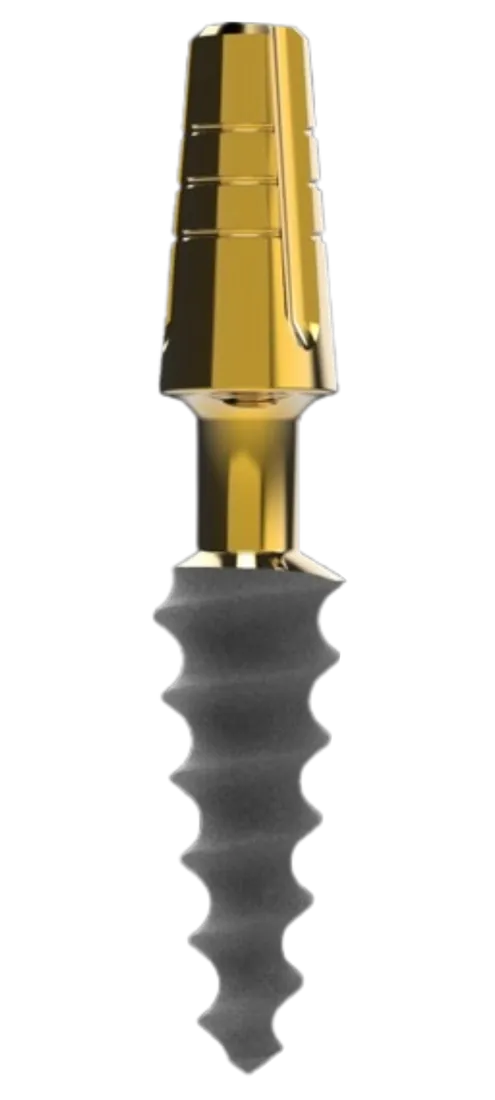
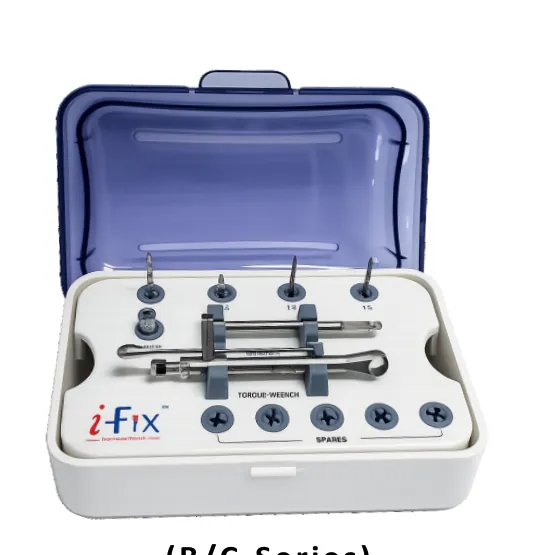
The C Series (i-Fix C1) uses a compressive thread design that condenses soft cancellous bone with a minimum osteotomy, specifically indicated for narrow ridges aiming to avoid bone augmentation.
Full C Series specification →03 Typical treatment process
A general implant workflow for this case type — individual timelines vary by patient and clinician judgment.
Ridge width mapping identifies sites below the threshold for a standard-diameter osteotomy.
Cross-sectional imaging confirms enough bone for a compressive, minimal-osteotomy approach.
Reduced-diameter osteotomy; the compressive thread condenses bone laterally during placement.
Loading protocol selected per the achieved primary stability at placement.
04 Product & kit
05 Key takeaways
Submit documented, consented case photography or planning notes and the clinical team will follow up on publishing it properly — with attribution, not as an anonymous marketing example.