

Planning
CT-based zygomatic bone assessment confirms anchorage path and required implant length.
i-Fix Clinical planning scenario · Severe Atrophy
Zygomatic anchorage for atrophic maxilla cases that would otherwise need major grafting.
This is a clinical planning scenario — how implant geometry and platform map to this category of case — not a documented individual patient record. Real, consented case documentation lives in Before / After.
01 The clinical challenge
Severe maxillary atrophy where there isn’t enough native alveolar bone for conventional implants, and the alternative is an extended bone-grafting and healing timeline before any implant can be placed.
02 The implant solution
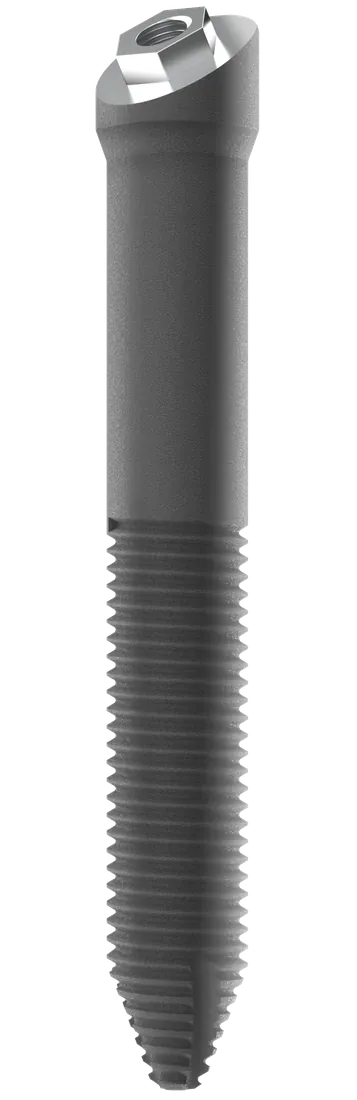
The ZE Series (i-Fix Zygon) anchors in the zygomatic bone instead of the atrophic ridge, in lengths from 30–62.5 mm with a 55° angulated head — built specifically to avoid the grafting stage and support an immediate fixed provisional.
Full ZE Series specification →03 Typical treatment process
A general implant workflow for this case type — individual timelines vary by patient and clinician judgment.
CT-based zygomatic bone assessment confirms anchorage path and required implant length.
Surgical guide planning maps the trajectory from the alveolar crest into the zygomatic body.
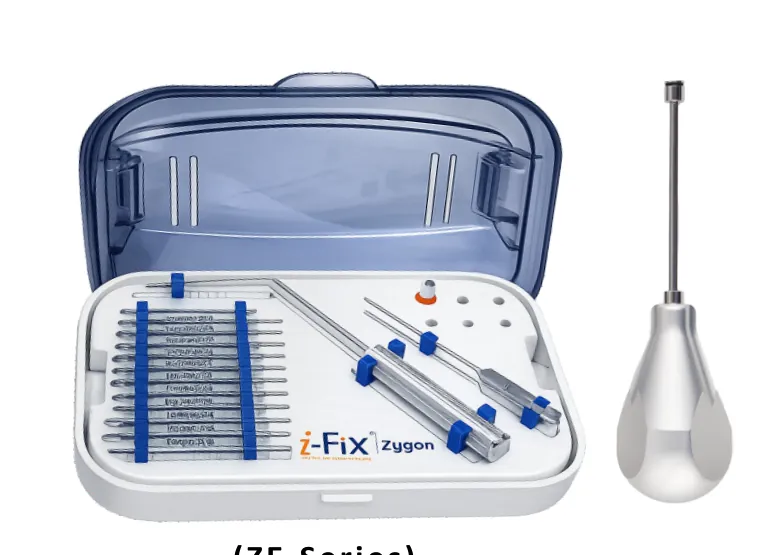
Placement using the dedicated Smart Surgical Kit drilling sequence for the zygomatic platform.
Multicortical anchorage is typically stable enough to support a fixed provisional prosthesis immediately.
04 Product & kit
05 Key takeaways
Submit documented, consented case photography or planning notes and the clinical team will follow up on publishing it properly — with attribution, not as an anonymous marketing example.